
This site uses affiliate links and I may earn a commission at no extra cost to you.
This easy vegan Thai red curry comes together faster than take-out, using frozen vegetables, a can of coconut milk, and store-bought curry paste for a vegetarian dinner in about 30 minutes. If you love it, try my hands-off slow cooker red curry with tofu next.

Want to save this recipe?
It’s packed with flavor, veggies, and a kick of spice, and it’s one of my favorite budget-friendly weeknight meals. It’s also flexible enough to clear out whatever’s in your fridge, and it tastes even better on day two.
Quick Glance
- Recipe Name: Vegan Thai Red Curry
- Why You’ll Love It: Faster and cheaper than take-out, with no chopping beyond one onion.
- Time and Difficulty: 30 minutes total, easy.
- Method: Sauté, add the coconut milk and curry paste, then simmer the frozen veggies for 10 minutes.
- Texture and Flavor: Creamy, fragrant, spicy, and savory.
- Quick Tip: Keep a bag of frozen stir-fry veggies on hand so dinner is always 30 minutes away.
Table of Contents
- What Makes This Vegan Thai Red Curry So Good
- Ingredient Notes
- Choosing a Vegan Red Curry Paste
- Why Frozen Vegetables Work
- Recipe Variations and Add-Ins
- How to Make Vegan Thai Red Curry
- How to Make It Lighter
- Storage Instructions
- Vegan Thai Red Curry FAQs
- More weeknight dinners:
- Vegan Thai Red Curry (30 Min Meal) Recipe
What Makes This Vegan Thai Red Curry So Good

This curry is built on pantry and freezer staples, so you can make it any night of the week.
- One pan, 30 minutes: Store-bought red curry paste and frozen vegetables do most of the work.
- Healthier and cheaper than take-out: Plus, it’s ready before delivery would arrive.
- Naturally vegan: No fish sauce or shrimp paste.
- Great for leftovers: It tastes even better the next day.
Serve it with rice or noodles. Looking for more Thai-inspired recipes? Try my tofu pad Thai, vegan vegetable pad Thai, vegan Thai pizza, crunchy Thai peanut salad, Thai butternut squash soup, or Thai mango sticky rice for dessert.
Ingredient Notes
Refer to the recipe card for exact quantities.

- Red onion and oil: The savory base, sautéed until tender.
- Garlic powder and ginger powder: Pantry shortcuts that keep this fast.
- Diced tomatoes: Canned, with their juices.
- Coconut milk: Makes the sauce creamy. Use light coconut milk for a lighter curry.
- Red curry paste: The star of the dish. More on choosing one below.
- Water and soy sauce: Thin the sauce and add savory depth.
- Frozen stir-fry vegetables: No chopping needed.
- Lime: A squeeze at the end wakes up all the flavors.
Choosing a Vegan Red Curry Paste
Red curry paste is made from red chilies, lemongrass, shallots, galangal, garlic, and more. Some brands also include shrimp paste or fish sauce, so always check the label.
Brands of red curry paste vary a lot in spice and flavor, so it’s worth trying a few. I used Thai Kitchen, and I adjust the lime juice and sweetener to suit whichever paste I’m using. Start with half the amount and add more to taste. Prefer something with no heat at all? Try this easy vegan curry instead.
Why Frozen Vegetables Work
Frozen stir-fry vegetables are already washed and cut, so they go straight from the freezer into the pan with no thawing. They’re budget friendly, they keep for months, and they mean you can make this curry even when the fridge is empty. Any frozen stir-fry blend works.
Prefer fresh vegetables? Chop them into similar-sized pieces and add them in order of cooking time, hardest first and softest last.
Recipe Variations and Add-Ins
- Sweetener: Add 1 to 2 teaspoons of coconut sugar or maple syrup for depth and balance.
- Kaffir lime leaves: Add 3 to 5 leaves for a savory, citrusy note.
- Extra spice: Add hot sauce, sriracha, red pepper flakes, or minced chili.
- Protein: Add chickpeas, quick crispy pan-fried tofu, tempeh, or vegan chicken.
- Potato: Add bite-sized pieces of Yukon Gold, red, or sweet potatoes.
- Vegetables: Use any mix of baby corn, carrots, mushrooms, snap peas, green beans, bell peppers, broccoli, cauliflower, leafy greens, or bamboo shoots.
How to Make Vegan Thai Red Curry

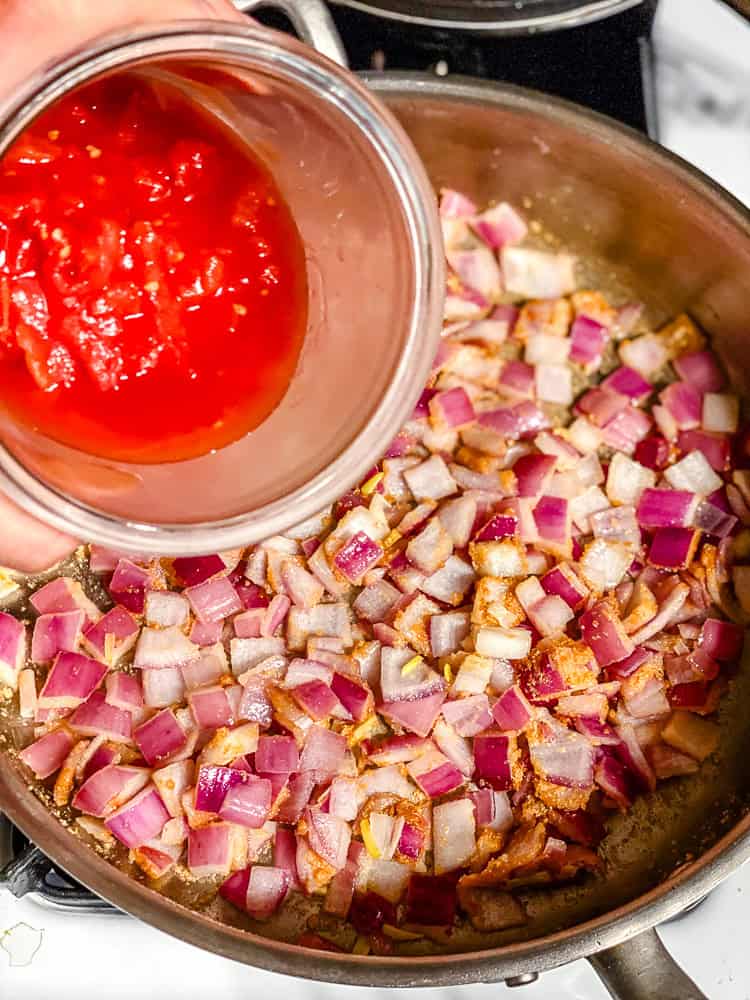
Step 1: Sauté the onion. Heat the oil in a large, lidded pan over medium-high heat. Add the diced red onion and sauté until tender.
Step 2: Add the aromatics and tomatoes. Stir in the garlic powder and ginger powder for about 5 seconds, then add the canned tomatoes and cook until the mixture begins to boil. If you’re using fresh garlic and ginger, add them after a minute or two.
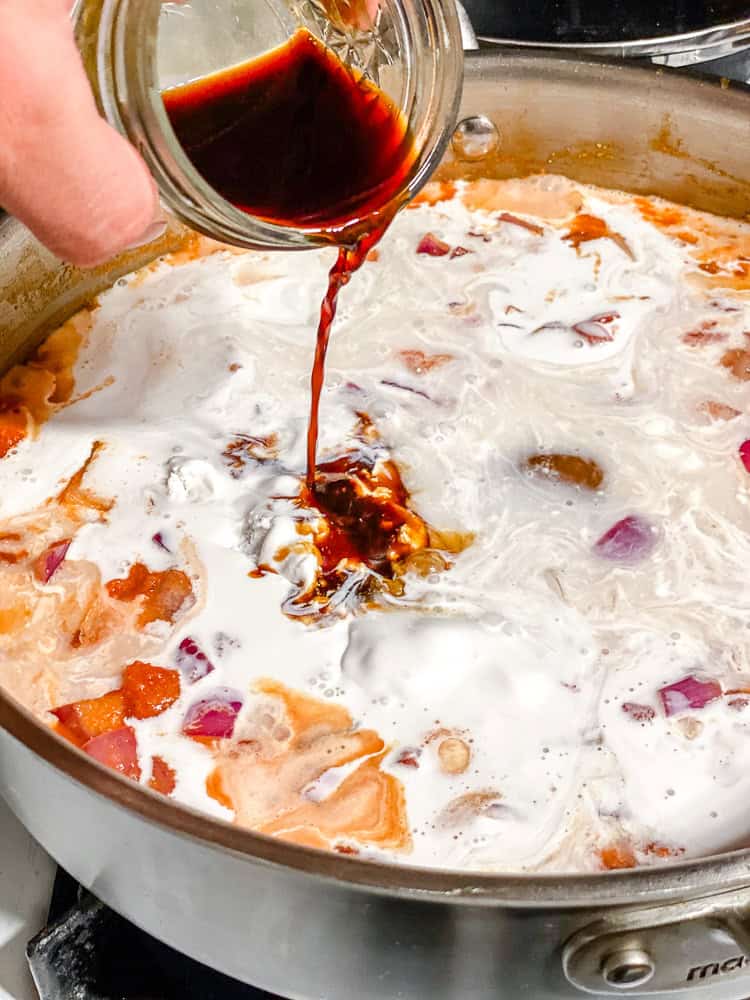
Step 3: Make the sauce. Stir in the coconut milk, curry paste, water, and soy sauce, and bring to a boil.
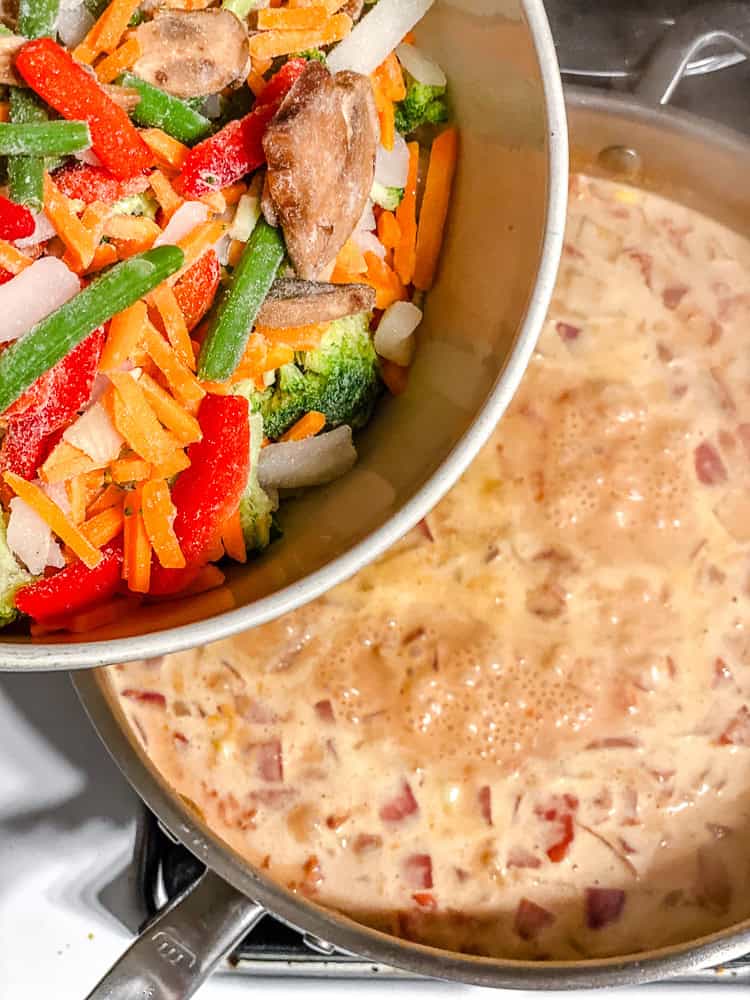
Step 4: Simmer the vegetables. Add the frozen stir-fry vegetables and mix well. Once it returns to a boil, lower to a simmer, cover, and cook for 10 minutes.

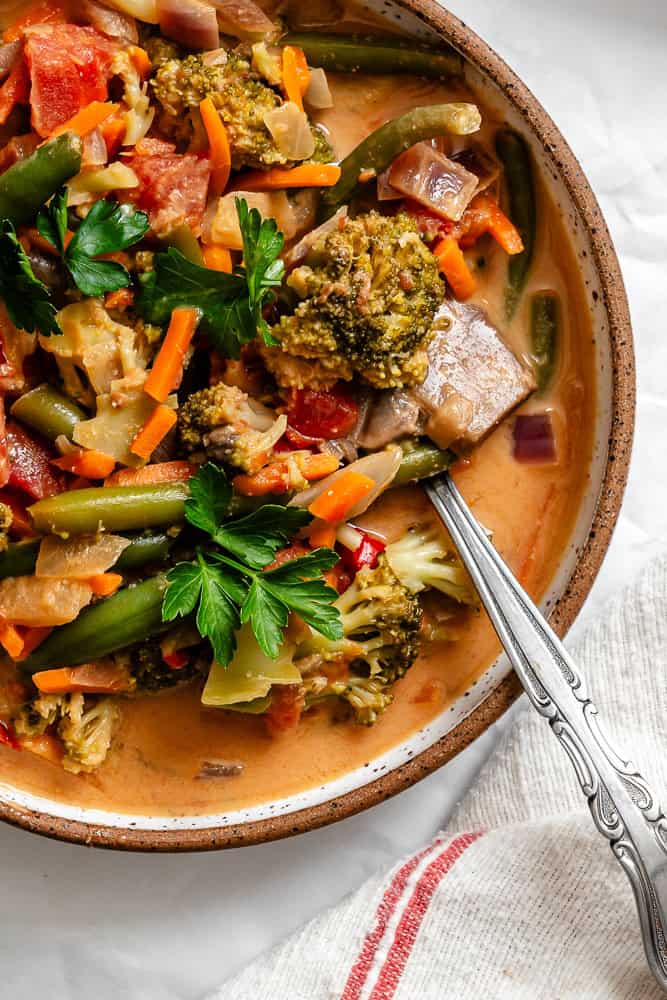
Step 5: Finish with lime. Turn off the heat, uncover, squeeze in the lime juice, and stir. Serve, garnished with cilantro or Thai basil, lime wedges, crushed peanuts, or thinly sliced red chili if you like.
PRO TIP: For the deepest flavor, add the curry paste to the pan to temper it for 1 to 2 minutes before stirring in the coconut milk.
Serve it with jasmine rice, Thai sticky rice, or brown rice (here’s how to cook brown rice), or with quinoa (see my complete guide to quinoa).
How to Make It Lighter
Coconut milk is what makes this curry rich and creamy, but it’s also high in saturated fat. For a lighter version, use light coconut milk, or use less coconut milk and more water or broth. Either way, the sauce will be a little thinner.
Storage Instructions
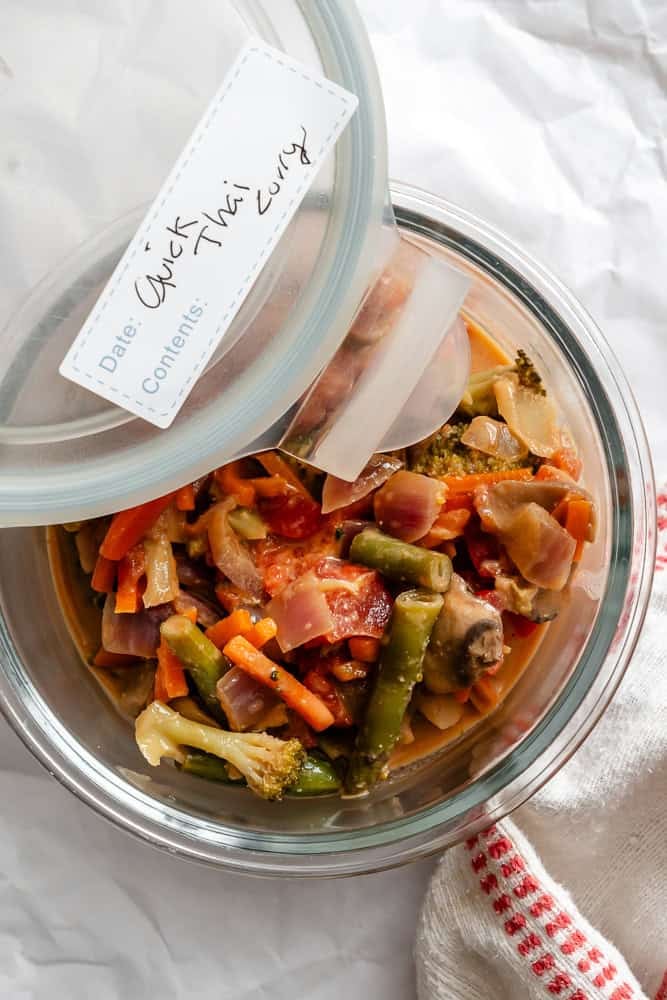
- Fridge: Store in an airtight container for 3 to 4 days. It tastes even better on day two.
- Freezer: Let it cool, then store in a Stasher bag or freezer-safe container for up to 3 months. I use these labels. Thaw in the fridge overnight. The vegetables will be softer after thawing.
- Reheat: In the microwave in 30-second increments, stirring between each, or on the stove over low to medium-low heat until piping hot.
Vegan Thai Red Curry FAQs
We haven’t tested soy or almond milk in this recipe. It would probably work, but the curry would be thinner and taste different. Light coconut milk is the tested way to cut back on fat while keeping the creamy texture.
It usually ranges from mild to medium heat, but brands of curry paste vary a lot. Start with less paste and add more to taste.
At the end of cooking, stir in a slurry of 1 to 2 Tablespoons of cornstarch mixed with 4 Tablespoons of water. Turn the heat up slightly and stir until it thickens.
This version is packed with vegetables and has no fish sauce or added meat. The coconut milk makes it rich, so check out the lighter version above if you’re watching saturated fat.
If you tried this Vegan Thai Red Curry recipe or any other recipe on my blog, please leave a 🌟 star rating and let me know how it went in the 📝 comments below. Thanks!
More weeknight dinners:

Vegan Dinners
Sweet Potato Quinoa Chili

Vegan Dinners
Kale Vegetable Bean Soup
Vegan Dinners
Lentil Bean Chili

If you’re loving my recipes and would like a more comprehensive resource, check out my cookbooks!

Vegan Thai Red Curry (30 Min Meal)

Want to save this recipe?
Ingredients
- 2 Tablespoons high-heat oil (30 ml)
- 1 red onion diced
- 1 Tablespoon garlic powder (15 ml)
- 1 Tablespoon ground ginger (15 ml)
- 14.5 ounces can diced tomatoes, with their juices (411 g)
- 13.5 ounces can coconut milk, full-fat or light (383 g)
- 1 Tablespoon red curry paste, plus more to taste (15 ml)
- ½ cup water (120 ml)
- 2 Tablespoons soy sauce (30 ml)
- 2 pounds frozen stir-fry vegetables, no need to thaw (907 g)
- 1 lime
Instructions
- Heat the oil in a large, lidded pan over medium-high heat. Add the diced onion and sauté, stirring occasionally, until tender.

- Stir in the garlic powder and ground ginger and cook for about 5 seconds. Add the diced tomatoes with their juices and bring to a boil.
- Stir in the coconut milk, curry paste, water, and soy sauce, and bring back to a boil.
- Add the frozen vegetables and stir. Once it returns to a boil, reduce the heat to low, cover, and simmer for 10 minutes.
- Turn off the heat, uncover, and squeeze in the juice of the lime. Stir well.
- Serve hot over rice or quinoa, with any garnishes you like.


Notes
- Curry paste: Brands vary a lot in heat. Start with half the paste and add more to taste.
- Fresh aromatics: For the best flavor, use fresh garlic and ginger instead of the powders, and add them a minute or two after the onion.
- Deeper flavor: Add the curry paste to the pan for 1 to 2 minutes before the coconut milk to temper it.
- Lighter version: Use light coconut milk, or less coconut milk and more water or broth.
- Fresh vegetables: Cut them into similar-sized pieces and add the hardest ones first.











Do you have to use coconut milk… can I use soy or almond milk? I can’t do saturated fat.
Hi! We on the PBOAB team haven’t tried a vegan milk alternative for this recipe so I can’t guarantee the results. I imagine that it’d still turn out just as great, just slightly different in taste and texture. Let us know if you give it a go 🙂