
This site uses affiliate links and I may earn a commission at no extra cost to you.
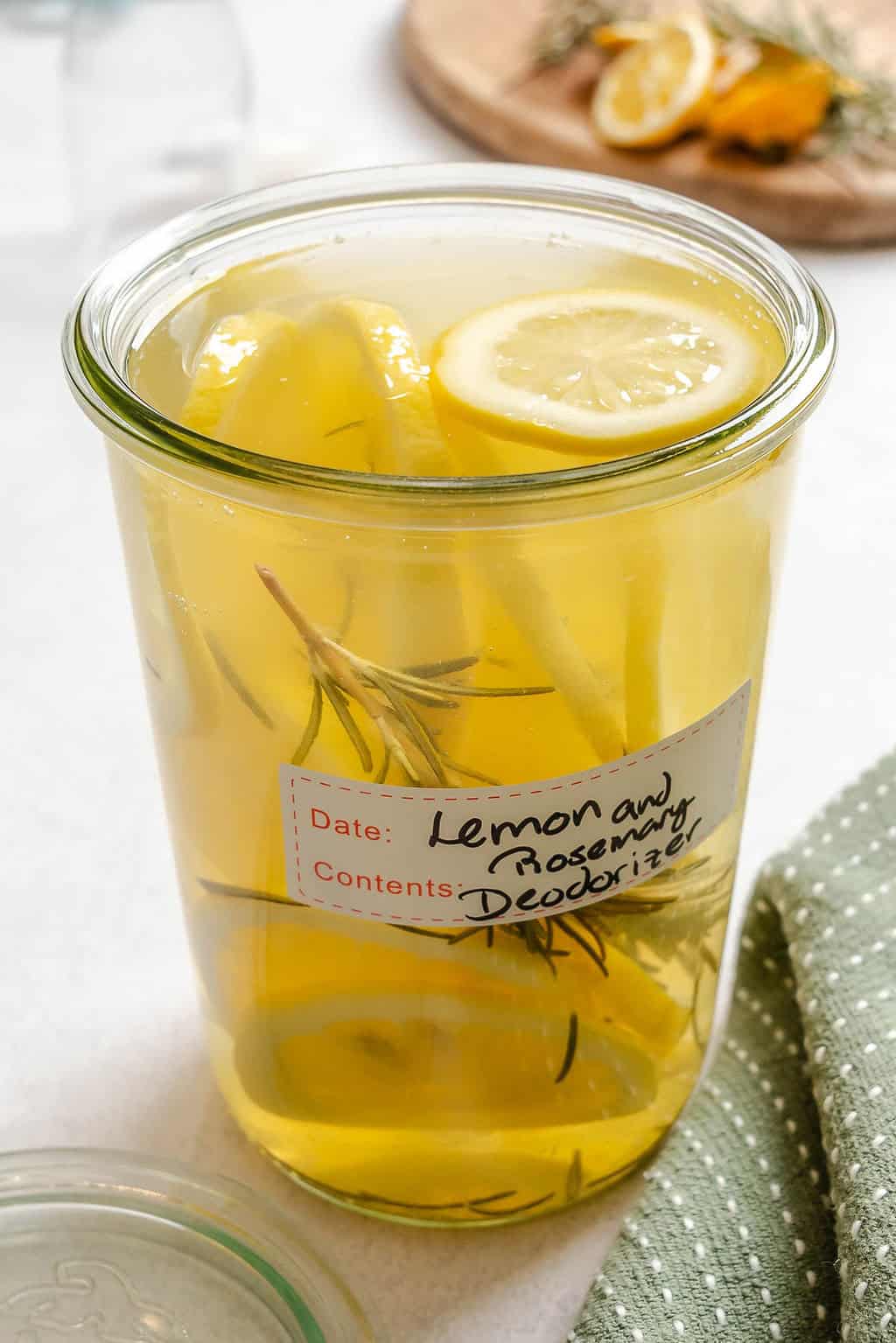
This easy homemade rosemary air freshener and room deodorizer uses just lemon, fresh rosemary, and water. Simmer it on the stove and your whole house will smell fresh. Have extra rosemary? Use it in my rosemary tea.

Want to save this recipe?
I wanted my home to smell nice without the chemicals in so many store-bought air fresheners and candles. This low-budget, all-natural version is easy to customize and puts kitchen scraps like lemon peels to good use.
Quick Glance
- Recipe Name: Rosemary Air Freshener
- Why You’ll Love It: Cheap, non-toxic, and made from kitchen scraps.
- Time and Difficulty: About 35 minutes, easy.
- Method: Simmer lemon and rosemary in water, then use as a simmer pot or cool and bottle as a spray.
- Scent: Fresh, clean, citrusy, and herbal.
- Quick Tip: Use a stainless steel or enamel pot, not aluminum.
Table of Contents
What Makes This Rosemary Air Freshener So Good

Non-toxic: No synthetic fragrance, just lemon, rosemary, and water.
Budget friendly: It uses lemon peels, soft herbs, and other scraps you’d otherwise toss.
Two ways to use it: Simmer it for continuous scent, or bottle it as a spray.
Eco-friendly: Less waste, and the leftovers go in the compost.
Love rosemary? Try my vegan rosemary crackers, rosemary roasted potatoes, or candied rosemary walnuts.
What You’ll Need
This version pairs lemon with rosemary, but it’s easy to customize.

- Lemon: Use slices or peels and scraps. Other citrus works too, and a few drops of lemon essential oil boost the scent.
- Rosemary: Fresh sprigs are best. You can also add rosemary essential oil to the cooled mixture.
- Vanilla extract (optional): Adds a warm, sweet note.
- Water
Add-Ins and Scent Combinations
- Baking soda: Add about 1 Tablespoon per cup of water after cooling, to help absorb odors rather than just mask them.
- Spices: Cinnamon, cloves, cardamom, peppercorns, fresh ginger, and more.
- Herbs and florals: Eucalyptus, thyme, jasmine, lavender, rose petals, peppermint, and more.
- Fruit: Other citrus, apple, pineapple, strawberries, or peaches, usually the peels, cores, and scraps.
- Coconut: Shredded coconut or coconut essential oil.
How to Make a Rosemary Simmer Pot
- Combine. Add the lemon slices or peels, water, rosemary, and vanilla extract (if using) to a medium saucepan.
- Simmer. Bring to a boil, then lower the heat and simmer gently for 20 to 30 minutes, until your kitchen smells fresh.
- Keep it going. For an all-day simmer pot, check every 30 to 40 minutes and add water as needed so the pot doesn’t dry out. A slow cooker works too.

Want a Spray Instead?
You can also turn it into a room spray. Let the simmered mixture cool completely, then pour it into a spray bottle, using a funnel if that helps.
Store the spray in a cool, dark place and use it within 2 to 3 weeks.
Pro Tips
- Use non-reactive cookware: Stainless steel or enamel, not aluminum, since lemon is acidic.
- Watch the water: Don’t let it evaporate completely, or the lemons and rosemary will scorch.
- Use your scraps: Save peels, wilted herbs, and other scraps from cooking, and compost what’s left. Great lemon recipes for leftover peels include my lemon dressing, easy lemon popsicles, lemon poppyseed cake, and vegan lemon blueberry loaf.
Usage Ideas
- Freshen any room in the house.
- Lightly mist pillows, curtains, cushions, and blankets.
- Keep a bottle in the bathroom.
- Refresh your car.
- Take it on vacation for stuffy hotel rooms.
- Mix it with equal parts vinegar for an all-purpose surface cleaner.
FAQs
A simmer pot, also called stovetop potpourri, is water simmered with fragrant herbs, spices, and fruit. The steam fills your home with scent and masks stale odors, and you can change the ingredients with the seasons.
Not in the way an air purifier does. Simmering rosemary and lemon fills your home with a fresh scent and helps cover cooking and stale odors, but it doesn’t filter or clean the air. Adding baking soda to the spray can help absorb some odors.
Keep the spray in a cool, dark place away from sunlight and use it within 2 to 3 weeks. Leftover simmer pot ingredients can go in the fridge overnight and be reheated once before you compost them.
Yes. Use about 10 to 16 drops of essential oil per cup of water, with no heating needed. Try orange and cinnamon, lemon and thyme, or lavender and vanilla. Avoid using essential oil sprays on furniture or around cats.
It’s generally considered safe for dogs and cats. If you have cats, skip the lemon essential oil, since cats lack a liver enzyme needed to break down d-limonene.
More Ways To Use Lemon

Vegan Dinners
Buttery Lemon Tofu and Asparagus

Vegan Desserts
Vegan Lemon Loaf Cake

Vegan Desserts
Lemon Blueberry Cookies

Vegan Desserts
3-Ingredient Lemon Glaze
If you tried this homemade air deodorizer recipe or any other recipe on my blog, please leave a 🌟 star rating and let me know how it went in the 📝 comments below. Thanks!

Homemade Air Deodorizer (+ Simmer Pot)

Want to save this recipe?
Ingredients
- 4 cups water
- 2 lemons sliced (or peelings of 4 lemons)
- 2 sprigs rosemary
- 1 teaspoon vanilla extract (optional)
Instructions
- Add the water, lemon slices, rosemary, and vanilla extract (if using) to a medium pot.
- Bring the mixture to a boil over high heat.
- Once boiling, reduce the heat to low and let it simmer gently.
- Allow it to simmer for 20 to 30 minutes, or until the kitchen smells fresh and fragrant.
- Keep an eye on the pot and add more water as needed to prevent it from drying out.
Notes
- Use non-reactive cookware: Like stainless steel or enamel (avoid aluminum) when using acidic ingredients, like lemon.
- Monitor while simmering: Don’t let the water dry out to avoid burning the lemons and rosemary. For a simmer pot, check every 30-40 minutes.
- Use scraps: Using peels, wilted herbs, and other scraps is perfect to reduce waste. Compost leftovers.













Love this all natural and I’m sure smells amazing! Definitely will try!
It’s incredibly fresh and clean!
Perfect idea! Thanks for sharing this recipe!
It’s a great one for that clean feeling!
I love, love home recipes like this! I just recently planted rosemary in my garden, so I can’t wait to try this. Thank you! Yay, fresh house!
Awesome!! Let us know how it goes for you 🙂
i made a couple bottles today and my home smells so wonderful now
Awesome! It’s a winner!
With 2 cats and a compost bin that fills up instantly, this was the perfect way to freshen our house. My mother in law even commented that the house smelled to fresh and clean LOL.
Love to hear that! It’s definitely a big help in our house too!
This works so well! I am a bit obsessed with having a nice smelling house, and I only use natural sprays. They’re so expensive at the store I wanted to find a DIY version – this spray is perfect. It works better than the store bought stuff and is super easy to make!
It’s definitely a winner!
Wonderful combination of lemons and rosemary. I am always looking for ways to freshen my home.
This is the one!
now I know what to do with my lemon peels, thanks for this! I use vanilla too.
I bet the vanilla smells amazing too!
I love the smell of rosemary so much but never thought to use it as a deodorizer. Thanks so much!
It’s quite refreshing!
Love this! Thanks for sharing!
It smells so lovely!
What a great way to repurpose your leftover lemon peels!!
Yesss! Smells so refreshing and clean!
So refreshing!